By Matija Šerić
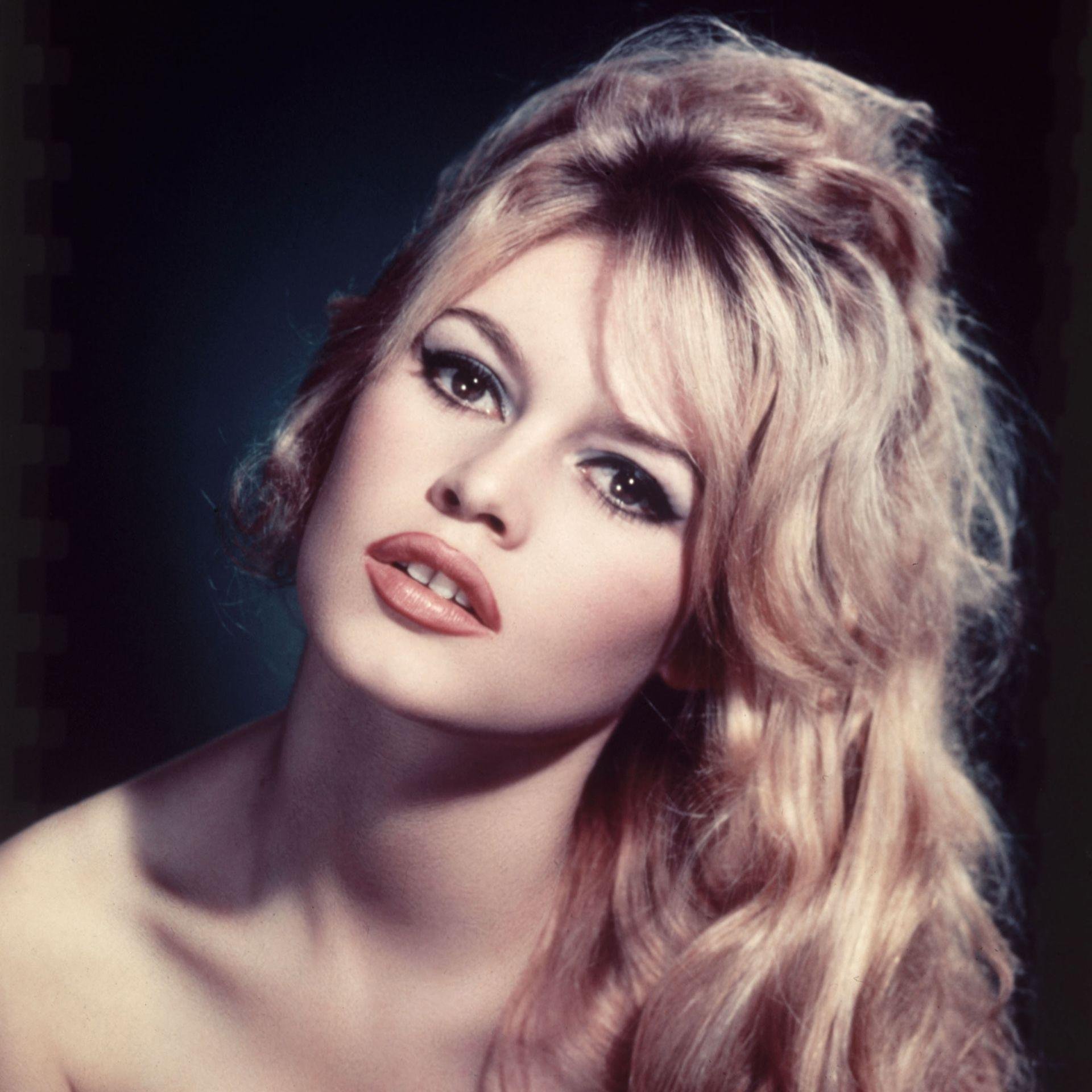
As often happens during the holiday season, this year too we are bidding farewell to famous figures. On December 28, at the age of 92, Brigitte Bardot passed away — a French actress, model, singer, and animal rights activist. Although she had a colorful biography, it can be stated most succinctly that she was the greatest French actress of the 20th century. With her attractive appearance and acting skills, Bardot became a sex symbol of the 1960s and 1970s and one of the most recognizable French export products, alongside cognac and Renault automobiles, as Charles de Gaulle once famously remarked. “We mourn a legend,” wrote President Emmanuel Macron on X, and he was undoubtedly right. She was a truly unrepeatable figure.
A Childhood of Contrasts
Brigitte Anne-Marie Bardot was born on September 28, 1934, into a relatively wealthy and conservative Catholic family. Her father was an industrialist, and her mother the daughter of an insurance company director. She also had a younger sister, Mijanou Bardot. Although she was born into material security (a house with seven toilets in the luxurious 16th arrondissement of Paris), her childhood was far from easy. She described it as “difficult,” primarily because her father was overly protective (he beat her with a horsewhip), while her mother carefully chose whom she was allowed to socialize with. As punishment for childish misbehavior (such as knocking over a vase), she and her sister were forced to address their parents using the formal vous. As a child, she suffered from amblyopia and retained poor vision in her left eye for the rest of her life. It was a childhood of contrasts, far from a fairy tale.
Death of famous actress was a sad news for many
From Ballerina to Model
Bardot was withdrawn by nature. She attended classical ballet school, and family connections helped her land the cover of Elle magazine at the age of 15. She was noticed there and replaced a potential ballet career with one as a photo model. Modeling, however, did not last long and served merely as a springboard into acting. At an audition, she caught the eye of a promising young director, Roger Vadim, with whom she began a romantic relationship. Her parents strongly opposed it, but eventually relented after her defiance (she threatened suicide), allowing the relationship on the condition that they marry once she turned 18 — which they did in 1952.
Early Film Career
That year marked her entry into what would become a hugely successful film career. In total, she appeared in 47 films, including musicals, and recorded more than 60 songs, despite not being a classical singer. Her first film was Crazy for Love, in which she played a minor supporting role. In 1953, she appeared in the American romantic blockbuster Act of Love, filmed in Paris and starring the famous Kirk Douglas. Although her talent was evident early on, instant fame did not come — it took time.
Global Recognition in 1956
Bardot achieved unquestionable star status and became a sex symbol through four films released in 1956: Naughty Girl, Plucking the Daisy, The Bride Is Much Too Beautiful, and And God Created Woman. The last brought her the greatest fame on a global scale. The film became a sensation not only in France, but also in the United States, Great Britain, and elsewhere. It was the directorial debut of her husband, Vadim. The film shattered established social norms and called for sexual freedom. Bardot played an immoral teenage girl who ran away from an orphanage, changed three lovers, and even slept with her brother-in-law. The film influenced French New Wave directors such as Jean-Luc Godard and François Truffaut, who promoted sexual liberation during the 1960s.
Trailer for the famous movie
Sex Symbol
More than her acting abilities, Bardot’s appearance in And God Created Woman made her famous — a slim waist, large breasts, voluminous blonde hair, and pouty lips. She became a sex symbol, further cemented not only through films but also through provocative photographs. Later, Bardot reflected on her early films: “It’s shameful to act so badly. At the beginning, I suffered a lot. They truly treated me as if I were worthless.”
She made film after film, and in 1958 became the highest-paid French actress. She was ranked among the top ten most popular box-office stars in North America — something previously unheard of for a French actress. The 1960 drama The Truth was nominated for an Academy Award for Best Foreign Language Film. In the mid-1960s, she increasingly made films aimed at international audiences. In 1965, Dear Brigitte was released, starring James Stewart, followed the next year by Viva Maria!, along with other films of varying success.
With the exception of the critically acclaimed The Truth (1960, directed by Henri-Georges Clouzot) and Contempt (1963, directed by Jean-Luc Godard), Bardot’s films were rarely masterpieces. More often, their content was designed to celebrate her appearance — in skimpy dresses, plunging necklines, or nude under the sun or studio lights. Women copied her gaze, look, makeup, and clothing style. She became a role model and a global cinematic icon.
The Final Years of Her Classic Career
During the 1960s and 1970s, she also appeared in musicals and recorded songs in collaboration with musicians such as Bob Zagury, Serge Gainsbourg, and Sacha Distel. Between 1969 and 1972, Bardot officially embodied Marianne — the allegorical female figure representing the French Republic, often called the Goddess of Liberty. Her likeness appeared on statues, postage stamps, and coins. Tired of acting, she concluded her film career in 1973, at the age of 39, with The Edifying and Joyous Story of Colinot. The following year, she posed for Playboy for her 40th birthday, thus ending her modeling career as well. She kept her word and never returned to acting.
Documentary about B.B.
Life Under the Spotlight
During the filming of And God Created Woman, she became romantically involved with her co-star Jean-Louis Trintignant, leading to the collapse of her first marriage to Vadim, with whom she nonetheless continued to collaborate professionally. The affair was short-lived but attracted intense paparazzi attention that followed her every move. She never adjusted to living under constant public scrutiny. Her total of 17 romantic relationships drew enormous media attention. Unfortunately, she had no private life, which negatively affected her mental health.
She was married to actor Jacques Charrier from 1958 to 1962, with whom she had her only child, Nicolas. Paparazzi photographed her just two weeks before giving birth, and after the delivery she sank into such deep depression that she attempted suicide. She later stated that she would most likely have chosen abortion had it been legal in France at the time, as she was not ready to be a mother. She described the child in her womb as a “malignant tumor.” Although she was granted custody of Nicolas, they fell out when he was 12, after she once refused to stay with him and instead chose to socialize with guests. He never forgave her, and they did not communicate for decades, well into old age.
Her third marriage was to German industrialist Gunter Sachs, lasting from 1966 to 1969. Her fourth and final marriage was to Bernard d’Ormale, a right-wing activist and adviser to Jean-Marie Le Pen, founder of the powerful far-right National Front party. She remained with him until the end of her life.